When a Loved One Is Dying
The Family Dynamics Hospice Nurses Witness
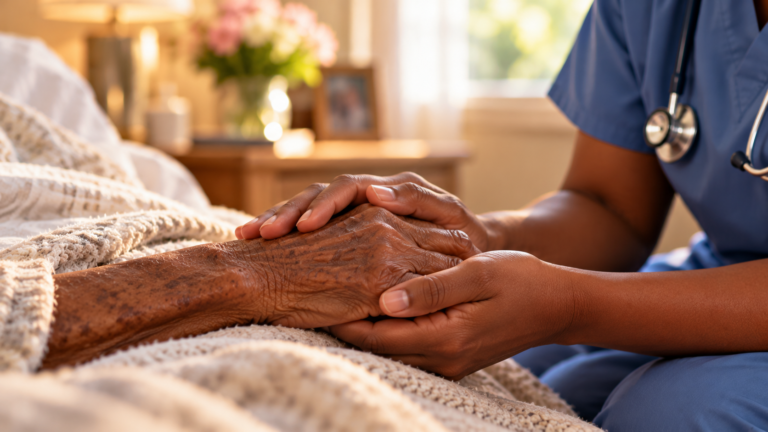
There is something about approaching death that brings the complicated nature of family relationships into sharp focus. As a hospice nurse, I’ve spent countless hours in patients’ homes, sometimes remaining at their bedsides for twelve hours at a time, and returning day after day as their lives come to an end.
During those long hours, I’ve witnessed some of the most beautiful expressions of human love and devotion imaginable. I’ve watched families come together, hold one another, share memories, laugh through their tears, and surround their dying loved ones with extraordinary tenderness.
But I’ve also witnessed something very different.
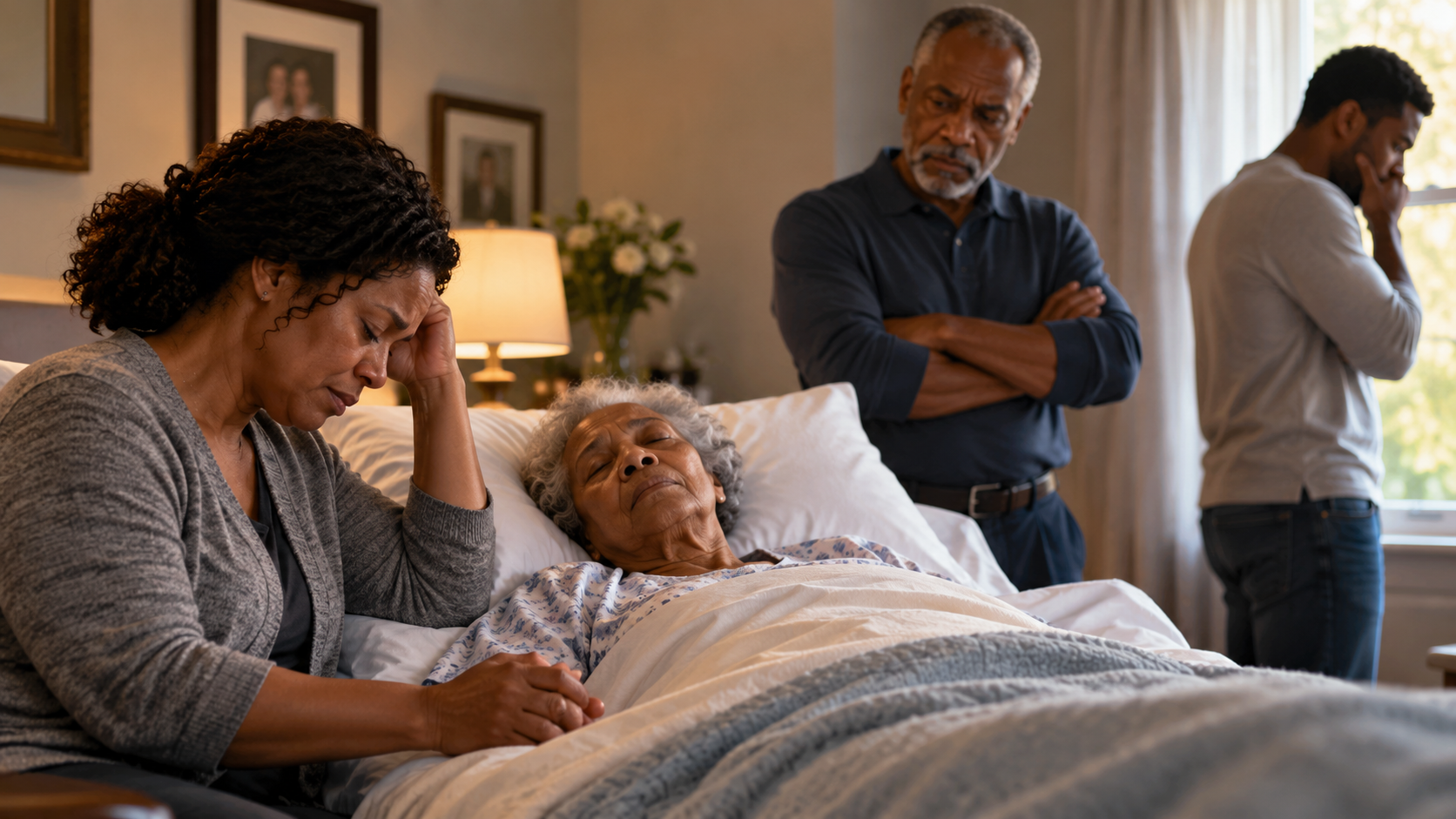
I’ve seen old resentments resurface, siblings turn against one another, estranged relatives suddenly reappear, and grief transform into anger directed at the very people trying to provide comfort to the dying.
Sometimes, the atmosphere in a patient’s home is peaceful and loving. Other times, the emotional tension is so thick that you can almost feel it when you walk through the door. And the person lying in that bed, sometimes barely conscious and unable to speak, is at the center of it all.
One thing I’ve learned over the years is that death doesn’t always bring families together. Sometimes, it exposes everything that has kept them apart.
When Families Come Together in Love and Grief
Some of my most treasured experiences as a hospice nurse have been with families who demonstrate remarkable love and unity during their loved one’s final days. There is something deeply moving about watching grown children gather around the bedside of a dying parent, putting aside their everyday responsibilities to spend whatever time remains together.
Sometimes, they sit quietly, holding a hand or gently stroking their loved one’s forehead. At other times, they share childhood memories, recalling funny incidents that bring unexpected laughter into a room filled with sadness.
I’ve watched family members take turns sitting at the bedside, making sure their loved one is never alone. I’ve seen husbands tenderly care for wives they have loved for decades, and wives lovingly attend to husbands who can no longer recognize them.
These moments remind me that love doesn’t always require words. Sometimes, love is simply just being there.
Love is the daughter who gently wipes her mother’s mouth. The son who sits quietly beside his father, holding his hand. The spouse who continues talking to a loved one who can no longer respond.
And sometimes, it’s a whole family that comes together, not because they think they can stop death, but because they want their loved one to feel loved until the very end.
Those are the moments that make hospice nursing profoundly meaningful. But not every family experiences the dying process this way.
When Old Wounds Resurface at the Deathbed
Families have histories. And those histories don’t disappear simply because someone is dying.
Behind every family gathering are relationships shaped by years of shared experiences, misunderstandings, disappointments, sacrifices, and sometimes deeply painful conflicts. When a loved one becomes terminally ill, unresolved issues can suddenly surface.
I’ve witnessed situations in which one family member has spent months, sometimes years, caring for a sick parent while other siblings have remained largely absent. The primary caregiver has been there through the sleepless nights, hospital appointments, medication schedules, physical exhaustion, and emotional strain.
Then, as death approaches, a previously absent relative suddenly appears. And sometimes, that arrival doesn’t bring the comfort or reconciliation one might expect. Instead, it brings resentment.
The family member who has carried the burden of caregiving may struggle to understand why someone who has been absent for so long is suddenly present, crying at the bedside or expressing overwhelming grief. Unspoken questions often begin to surface.
Where were you when Mom needed help?
Where were you when I was exhausted and couldn’t get a decent night’s sleep?
Why are you here now, all of a sudden?
Sometimes, those questions remain unspoken. Other times, they erupt into arguments, sometimes loud.
I’ve seen situations in which the relative who did the least caregiving suddenly begins questioning the decisions made by the person who has been there all along. And you can imagine how painful that can be.
But over the years, I’ve also learned to be careful about judging what I see. Family relationships are rarely as simple as they appear.
An absent relative may have reasons for staying away that are not immediately apparent. There may have been years of hurt, rejection, or circumstances that outsiders know nothing about.
And the person who appears at the deathbed after years of absence may be carrying guilt or regret that no one else can see. Being present at someone’s deathbed doesn’t necessarily tell the whole story of a relationship. Being absent doesn’t either.
Still, the emotional consequences of those complicated relationships can be heartbreaking to witness.
When an Estranged Relative Returns at the Very End
One of the more unsettling aspects of hospice nursing is witnessing how long-standing family estrangements sometimes intersect with the approaching death of a loved one. There are families in which siblings haven’t spoken for decades.
Parents and adult children may have been estranged for years. Some relatives have had little or no contact with the dying person throughout the illness.
And yet, when death becomes imminent, someone who has been absent for years may suddenly appear. Occasionally, the circumstances surrounding such an appearance raise uncomfortable questions.
I’ve encountered situations in which financial matters, inheritance, or life insurance become part of the conversations surrounding a dying person’s final days. It’s difficult not to reflect on the sadness of relationships that remain broken for so long, only for relatives to reconnect – or attempt to reconnect – when very little time remains.
But as a nurse, I cannot know everything that happened between family members before I entered their lives. I cannot always know what motivates someone to return.
What I do know is that death has a way of bringing unfinished relationships into focus. Occasionally, an estranged relative returns hoping for forgiveness.
Sometimes, there is an opportunity for a final conversation.
Sometimes, there is no reconciliation at all.
And sometimes, the dying person is no longer able to communicate, leaving the surviving relatives with questions and regrets that may never be resolved. There is something especially sad about that.
We often assume there will be another opportunity to make a phone call, repair a relationship, or say the words we’ve been putting off for years. But death has a way of reminding us that time is not unlimited.
One Family, Different Ways of Facing Death
Another family dynamic I’ve witnessed repeatedly involves the different ways people respond when someone they love is dying. Even within the same family, people can be at completely different places emotionally.
One daughter may have accepted that her mother’s death is approaching. She understands the prognosis, recognizes the physical changes, and wants her mother to remain comfortable and peaceful.
Meanwhile, her brother may still be insisting that something more should be done. He may believe that another hospitalization, another treatment, or another specialist could somehow change the outcome.
Another relative may refuse to discuss death altogether. And someone else may be angry – angry at the illness, angry at the situation, angry at the doctors, or simply angry that someone they love is being taken away.
These different emotional responses can create enormous tension. I’ve seen family members become upset with one another because one person appears to have accepted the inevitable while another continues hoping for recovery.
Sometimes, the person who has accepted the situation is accused of giving up. But acceptance is not the same as giving up on someone you love.
Recognizing that death is approaching does not diminish love for that person. It may simply mean understanding that the focus of care has shifted from trying to prolong life at all costs to ensuring comfort and dignity.
At the same time, the relative who continues hoping for a miracle is not necessarily being unreasonable or selfish. Hope can be extraordinarily difficult to surrender, especially when the person lying in that bed is a parent, spouse, sibling, or child.
Grief doesn’t follow a neat timetable. People don’t necessarily move through denial, anger, sadness, and acceptance in an orderly sequence.
These emotions can overlap, disappear, and return unexpectedly. And when several people experiencing those emotions are gathered in the same house, disagreements are almost inevitable.
When Grief Turns Into Anger, Blame, and Violence
One experience that has stayed with me over the years involved a family struggling to come to terms with a woman’s approaching death from cancer. Her husband had been informed that further cancer treatment was no longer expected to benefit her.
It was a heartbreaking reality, but one he had been forced to confront. Then, an adult family member arrived from out of town.
He was furious. He accused the husband of not doing enough to save his wife’s life, despite the medical team’s explanation that further treatment would not change the outcome.
What began as an angry confrontation escalated into physical violence. I watched in disbelief as the older man was attacked in his own home, at a time when he was already dealing with the impending loss of his wife.
The police were called, and I left that home shaken.
What disturbed me most was the cruelty of the situation. Here was a man who had helped raise a child who was not biologically his own, only to find himself physically assaulted by that same person during one of the most painful periods of his life.
I couldn’t help wondering how grief, anger, and unresolved family emotions could lead to such an ugly confrontation. Of course, I couldn’t know everything that had happened within that family over the years.
But what I witnessed that day was a painful reminder that the approaching death of a loved one doesn’t always bring out compassion. Sometimes, it brings out anger so intense that the people who are already suffering become targets themselves.
And while grief can help us understand why people behave in unexpected ways, it is never an excuse for violence.
When Grief Turns Into Anger Toward the Hospice Nurse
There is another side of these family dynamics that hospice nurses sometimes experience personally. Occasionally, we become the targets of a family’s anger, frustration, or helplessness.
I have cared for dying patients whose relatives were deeply distressed by the changes they were witnessing. Watching someone you love gradually lose the ability to eat, drink, speak, move, or respond can be devastating.
Even when families have been told what to expect, the reality of witnessing those changes can be overwhelming. Sometimes, a family member struggles to understand why the patient is not improving.
Why is Mom sleeping so much?
Why won’t Dad eat?
Why can’t something be done to make her stronger?
Why is he still suffering?
And occasionally, those questions are accompanied by frustration or accusations directed at the nurse providing care. As nurses, we understand that much of this anger comes from fear, grief, frustration, and the terrible helplessness of watching someone die.
But understanding the source of someone’s anger doesn’t necessarily make it easy to receive. We are human, too.
We may have spent hours carefully administering medications, repositioning the patient, managing distressing symptoms, providing personal care, and doing everything within our professional responsibilities to keep that person comfortable. However, in a moment of overwhelming emotion, a family member may direct their frustration toward us.
Over the years, I’ve learned that not every angry remark is really about the nurse. Sometimes, the anger is directed at the situation itself.
The illness.
The helplessness.
The realization that no amount of love, money, or medical intervention can always prevent death. That understanding helps me remain compassionate, even during difficult encounters.
But compassion must also exist alongside professional boundaries. Nurses should not be expected to tolerate threats or abusive behavior simply because a family is grieving.
Our responsibility is to provide safe, compassionate care while protecting the dignity of the patient and everyone involved. And sometimes, that requires patience, calm communication, and a great deal of emotional restraint.
The Quiet Burden of the Family Member Who Stayed
Amid all these complicated family dynamics, there is often one person whose sacrifices are easy to overlook.
The family caregiver.
In many homes, one relative carries most of the responsibility for caring for the dying person. Sometimes, it’s a spouse. Sometimes, an adult daughter or son.
Sometimes, a sibling, grandchild, or another relative. That family caregiver may have spent several months watching someone they love gradually decline.
They’ve managed medications, prepared meals, cleaned up after episodes of incontinence, coordinated medical appointments, and sacrificed sleep to respond to their loved one’s needs.
They may have neglected their own health, careers, relationships, and personal lives. And by the time hospice becomes involved, some are already physically and emotionally exhausted.
I’ve witnessed family caregivers who are so tired that they can barely keep their eyes open, yet remain reluctant to leave the bedside. I’ve also seen the emotional toll that develops when one person shoulders most of the caregiving while other relatives contribute little.
Then, as death approaches, family members who have been absent may suddenly arrive, sometimes offering support, but occasionally criticizing decisions made by the caregiver who has been there throughout the illness. That can be deeply hurtful.
What outsiders sometimes fail to recognize is that the primary caregiver may have been grieving long before the patient’s final days. They have watched the gradual loss of the person they once knew.
They’ve witnessed the decline in strength, independence, memory, and personality. In some ways, they’ve been saying goodbye a little at a time.
Their grief may look different from that of relatives who are only now confronting the reality of impending death. And their quiet strength deserves far more recognition than it often receives.
What Years at the Bedside Have Taught Me About Families
After years of caring for dying patients, I’ve come to appreciate just how complicated human relationships can be. I’ve learned that being related by blood doesn’t automatically guarantee closeness, loyalty, or devotion.
I’ve also learned that people express love and grief in very different ways. Some cry openly. Others become unusually quiet.
Some throw themselves into practical tasks because keeping busy is the only way they know how to cope. Others withdraw emotionally, not necessarily because they don’t care, but because the reality of what is happening feels unbearable.
I’ve witnessed extraordinary kindness from people who had every reason to feel exhausted and overwhelmed. I’ve also witnessed bitterness and resentment at moments when one might expect compassion.
And I’ve come to understand that a dying person’s bedside is not always the place where decades of family conflict can suddenly be resolved. We often hear stories of deathbed reconciliations – estranged relatives forgiving one another, old disagreements being forgotten, and families coming together for one final goodbye.
Those moments do happen. But they are not guaranteed. Some relationships remain fractured until the very end. Some apologies are never offered. Some words are never spoken.
And some people leave the bedside carrying regrets that may remain with them for the rest of their lives. Perhaps one of the most important lessons hospice nursing has taught me is that we should not wait until someone is dying to address the relationships that matter to us.
Of course, not every relationship can or should be repaired. Some estrangements exist for serious reasons, and forgiveness does not require reconciliation or renewed contact.
But where healing is possible, it can be valuable to have those difficult conversations while everyone still has the chance to participate. Because once death comes, that opportunity may be gone forever.
The Final Goodbye Cannot Rewrite an Entire Family History
When I walk into a patient’s home to provide hospice care, my primary responsibility is to the person lying in that bed. That person may be someone’s mother, father, husband, wife, sister, brother, or child.
They may have lived a long and fulfilling life, or their life may be ending far sooner than anyone expected. Whatever their family circumstances, they deserve to spend their final days and hours in as much comfort, peace, and dignity as possible.
And that is what I try to keep at the center of my work. The dying person’s needs should never become secondary to family conflict, regardless of any disagreements among the people gathered around the bedside.
I’ve seen families come together in extraordinary displays of love. I’ve seen people set aside old disagreements to focus on someone they all care about.
But I’ve also seen families remain divided, even as a loved one takes their final breaths. And perhaps that is one of the most difficult truths about death.
It does not automatically heal broken relationships. It does not erase years of resentment. It does not guarantee forgiveness, reconciliation, or even a peaceful goodbye.
Sometimes, death brings out the very best in people. Sometimes, it reveals wounds that have never healed. And sometimes, it does both within the same family.
After all these years at the bedside, one thing remains clear to me: death may bring a family into the same room, but it cannot guarantee that everyone arrives with the same love, memories, or intentions.
And amid all the grief, anger, regrets, and unfinished conversations, we must never lose sight of the person at the center of it all – the person who is dying. The person who deserves peace. The person whose final moments should be about comfort, compassion, and dignity – not the conflicts of those who will remain behind.